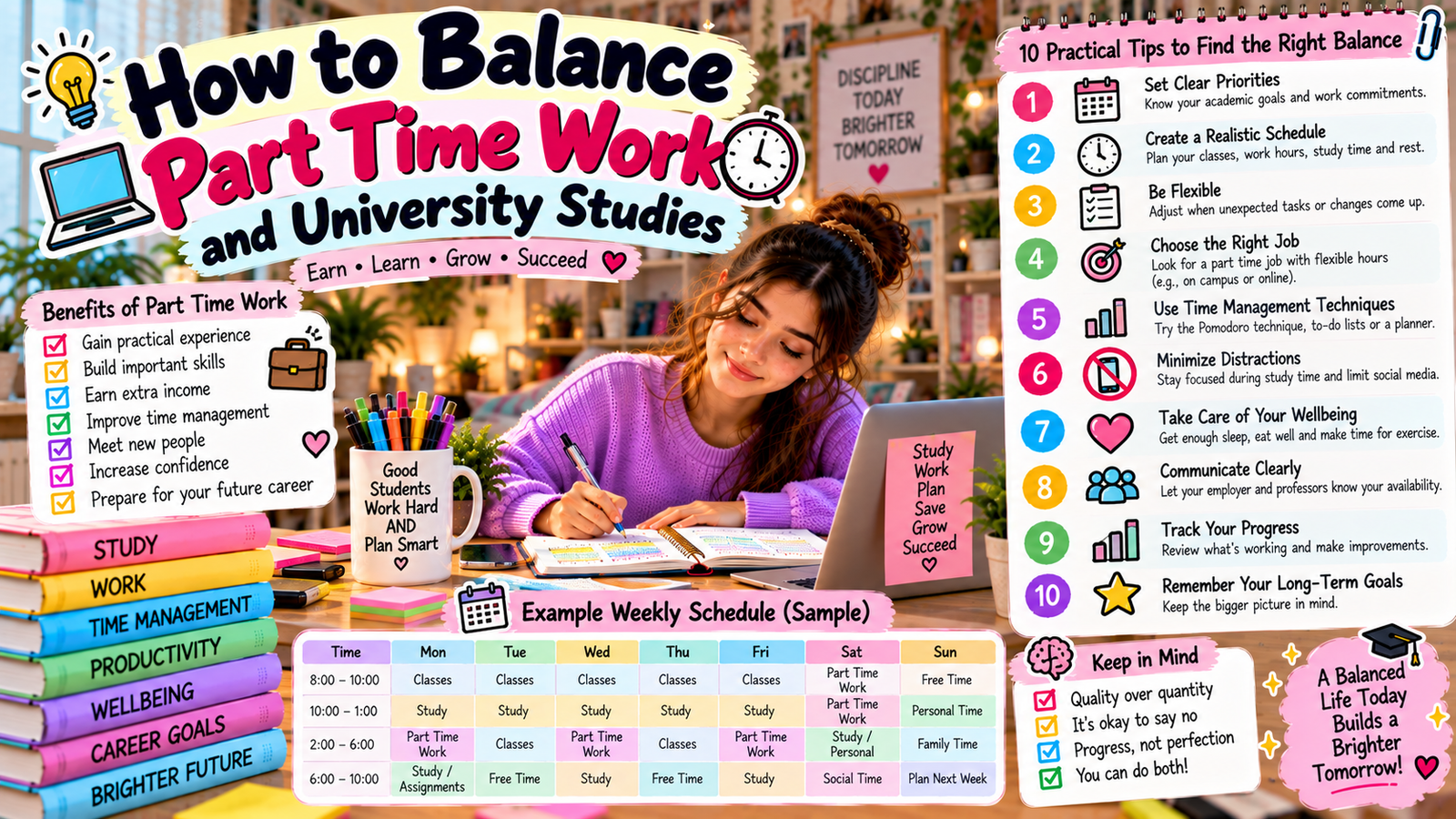
Balancing part time work and university studies can be challenging for students who want to earn money while completing their education. A job can help cover personal expenses, develop professional skills, and provide valuable work experience. However, combining employment with lectures, assignments, and examinations requires careful planning.
Some students struggle because their work shifts overlap with study time. Others feel tired after work and find it difficult to concentrate on academic responsibilities. Without a practical routine, even manageable tasks can begin to feel overwhelming.
In my opinion, balancing work and university is possible when students understand their limits, communicate clearly with employers, and organize their academic responsibilities before deadlines become urgent.
1. Understand Your Academic and Work Commitments
Start by reviewing your university timetable and employment schedule.
Write down your lectures, laboratory sessions, assignment deadlines, examination dates, and expected work shifts. Include travel time because commuting can take a significant part of your day.
This overview helps you identify when you are genuinely available for studying.
If your work schedule changes regularly, create a flexible weekly plan that you can update when new shifts are announced.
Understanding your commitments before making additional plans can prevent you from accepting more work than you can reasonably manage.
2. Create a Realistic Weekly Schedule
A weekly schedule can help you distribute your academic and employment responsibilities.
Begin with fixed commitments, such as lectures and confirmed work shifts. Then schedule time for assignments, revision, meals, sleep, and personal activities.
For example, you might reserve two afternoons for focused study and use shorter periods on workdays to review lecture notes.
Avoid planning every free hour for academic work. You need time to recover after work and manage unexpected responsibilities.
Your schedule should reflect your actual energy levels and workload rather than an ideal routine that is difficult to maintain.
3. Inform Your Employer About Your Study Needs
Communication with your employer can make a significant difference when balancing work and education.
If possible, explain your class timetable and examination periods before accepting shifts.
Ask about scheduling arrangements that may help you attend compulsory classes and prepare for important assessments.
Some employers may offer flexible hours, shift swaps, or reduced availability during particularly demanding academic periods. These arrangements depend on the workplace, so do not assume that every request will be approved.
Give as much notice as possible when discussing schedule changes.
Professional communication helps your employer understand your commitments and allows both sides to plan more effectively.
4. Prioritize Important Academic Deadlines
When work and university responsibilities overlap, decide which tasks require immediate attention.
An assignment due tomorrow may need priority over optional activities, while an examination next week may require several preparation sessions.
Keep a list of upcoming deadlines and divide major projects into smaller tasks.
If you know that a busy workweek is approaching, begin important assignments earlier.
Avoid relying on a single free evening to complete a large project. Unexpected changes to your shift or transportation arrangements could leave you with insufficient time.
Planning ahead can reduce the need for last minute study sessions.
5. Use Short Study Sessions on Busy Days
On days when you work several hours, a long study session may not be realistic.
Instead, use shorter periods for specific academic tasks.
You could review flashcards during a suitable break, read lecture notes before a shift, or complete a small set of practice questions after returning home.
Make sure your study activities are appropriate for the setting and do not interfere with your work responsibilities.
Save demanding tasks that require deep concentration for periods when you have sufficient time and energy.
Short sessions cannot replace every extended study period, but they can help you maintain contact with your subjects throughout a busy week.
6. Make Good Use of Free Time Between Classes
University schedules sometimes include gaps that can be used for academic work.
During these periods, you might review notes, prepare questions for your next lecture, read an assigned section, or organize your upcoming tasks.
Completing small activities during the day can reduce the amount of work you need to do after a long shift.
However, do not fill every break with studying. You may need some time to eat, relax, socialize, or prepare for your next class.
Choose tasks that fit the length of the available period and the environment in which you are studying.
7. Protect Your Sleep and Health
Working while studying can make it tempting to sacrifice sleep to finish assignments.
However, regularly sleeping too little may affect concentration, memory, mood, and academic performance.
Try to maintain a consistent sleep schedule and plan your work so that late night study sessions are not your only option.
Eat regular meals, drink enough water, and include physical activity when possible.
If you are constantly exhausted, review your employment hours and academic workload. Consider whether you need to discuss scheduling changes or seek support from your university.
Your health should not become the permanent cost of maintaining both responsibilities.
8. Set Boundaries With Personal Activities
A busy schedule may leave less time for social activities, entertainment, and hobbies.
You may need to make choices about how you use your free time, especially during examination periods.
Set reasonable limits on activities that frequently interfere with deadlines, such as extended social media use or unplanned outings.
At the same time, avoid eliminating all personal activities. Spending time with friends, relaxing, and maintaining relationships can support your general well being.
A balanced approach allows you to enjoy your personal life while respecting the responsibilities you have accepted.
9. Prepare for Examination Periods in Advance
Examination periods can become especially demanding when you also have regular work shifts.
Check your examination timetable as early as possible and estimate how much preparation each subject requires.
Begin revision before the final week and discuss any scheduling concerns with your employer in advance.
Use practice papers, active recall, and short revision sessions to make your study time more effective.
If you cannot reduce your work hours, consider how to distribute preparation across the weeks before examinations.
The earlier you plan, the more options you may have for managing competing responsibilities.
10. Review Whether Your Workload Is Sustainable
Balancing part time work and university is not only about organizing a timetable. It is also about deciding whether your total workload is manageable.
Review your academic results, attendance, sleep, stress levels, and ability to complete assignments.
If you are consistently missing deadlines or struggling to recover after work, something may need to change.
Depending on your circumstances, you could discuss different shifts, reduce optional commitments, use university academic support services, or reconsider the number of hours you work if financially possible.
Ask for help before the situation becomes unmanageable.
Conclusion
Balancing part time work and university studies requires realistic planning, communication, and careful attention to your health.
Create a weekly schedule, prioritize deadlines, use short study sessions when appropriate, and prepare early for examinations. Communicate with your employer and make use of university resources when you need support.
In my opinion, successful balance does not mean doing everything perfectly every day. It means finding a sustainable way to meet your responsibilities without consistently sacrificing your education or well being.
Review your routine regularly and make adjustments when necessary. With clear priorities and practical habits, you can work toward your academic goals while gaining valuable employment experience.
SEO title: How to Balance Part Time Work and University Studies
Focus keyword: How to balance part time work and university studies
Meta description: Learn how to balance part time work and university studies with effective scheduling, academic planning, employer communication, and healthy study habits.
Suggested URL slug: balance-part-time-work-university-studies