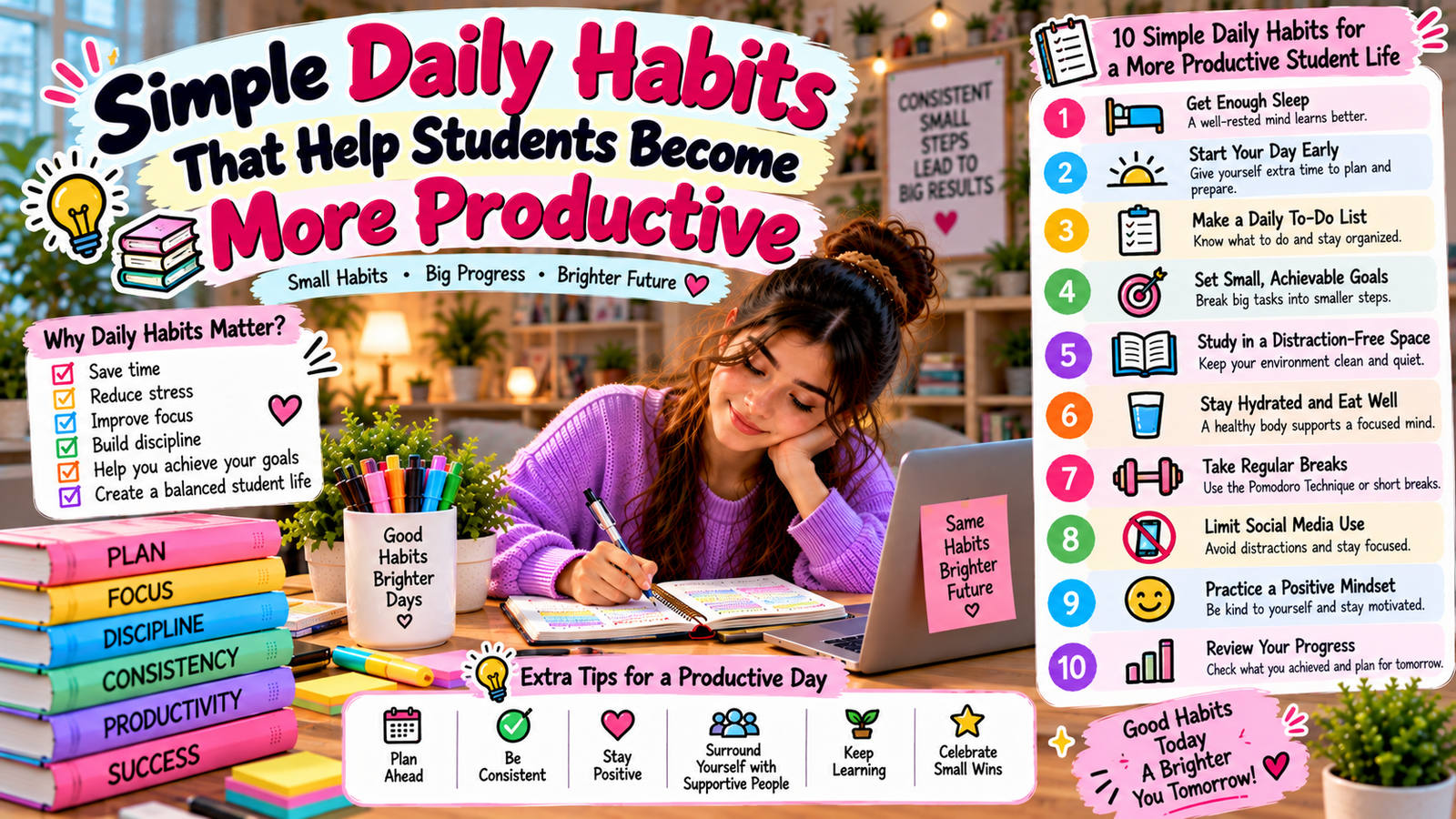
Productivity is an important part of student life. Students need to attend classes, understand lessons, complete assignments, prepare for examinations, and manage personal responsibilities. However, being busy throughout the day does not always mean that meaningful progress is being made.
Some students spend hours studying but become distracted frequently. Others postpone important tasks because they do not have a clear routine. Small daily habits can help address these challenges and make academic work easier to manage.
In my opinion, becoming a productive student does not require a complicated system or a perfect schedule. It begins with simple actions that can be repeated consistently. Over time, these habits can help you use your time more effectively and feel more organized.
1. Start Your Day With a Clear Plan
One useful daily habit is deciding what you need to accomplish before becoming involved in unrelated activities.
At the beginning of the day, write down your most important academic and personal tasks.
For example, your list might include attending lectures, completing a mathematics assignment, reviewing biology notes, and preparing for a group meeting.
Choose a few priorities rather than filling the list with every task you can imagine.
A clear plan helps you decide where to direct your attention when the day becomes busy.
You can prepare the list the previous evening if mornings are usually rushed. The important point is to begin the day with a reasonable idea of what needs to happen.
2. Make Your Bed and Organize Your Study Space
Small organizational habits can make your environment feel more manageable.
Making your bed, putting away unnecessary items, and arranging your study materials can create a sense of order at the beginning of the day.
An organized study space also makes it easier to find textbooks, notebooks, stationery, and other materials when you need them.
You do not need to spend a long time cleaning before every study session.
A few minutes of preparation may be enough to remove obvious distractions and create a comfortable place to work.
Keep the focus on making your environment useful rather than trying to make it perfect.
3. Review Your Lecture Notes Regularly
Reviewing lecture notes soon after class can help you identify concepts that need additional attention.
Instead of waiting until examination week, spend a short period reviewing the main ideas from each lecture.
Highlight important concepts, write brief summaries, and note any questions you want to ask your teacher.
You can also close your notes and try to explain the material in your own words.
This approach helps you identify gaps in your understanding before they become larger problems.
Regular review may also reduce the amount of material you need to revise immediately before an examination.
4. Use a Consistent Study Routine
A consistent study routine makes it easier to begin academic work.
Choose a time that fits your daily responsibilities and use it for focused study whenever possible.
For example, you might review lecture notes after lunch or complete assignments during a regular evening session.
Start by deciding what you will study and how long you will work.
If your schedule changes frequently, create a flexible routine with alternative study periods.
You do not need to follow identical hours every day. Consistency means maintaining the habit of making progress, even when the exact timing changes.
5. Focus on One Important Task at a Time
Trying to complete several demanding activities simultaneously can interrupt concentration.
For example, writing an essay while checking messages and watching videos may make the assignment take longer.
Choose one important task and give it your attention for a defined period.
Close unrelated browser tabs, silence unnecessary notifications, and keep the materials you need nearby.
When the task is complete or you reach a planned stopping point, move to the next activity.
Single tasking can make it easier to understand difficult concepts and produce more organized academic work.
6. Take Short Breaks During Study Sessions
Breaks are an important part of maintaining a sustainable study routine.
After a focused period of work, take a short break to stretch, walk around, drink water, or rest your eyes.
You can use a timer if you find it difficult to remember when to pause.
Choose a study and break schedule that suits your attention and the type of task you are completing.
Avoid allowing every break to become an extended period of scrolling or unrelated activity.
If you feel unusually tired, consider whether you need additional rest rather than forcing yourself to continue without concentration.
7. Keep Your Phone Under Control
Mobile phones provide useful educational resources, but they can also interrupt study time.
Notifications, messages, games, and social media may draw your attention away from important tasks.
During focused work, silence nonessential notifications and place your phone out of immediate reach when possible.
If you need your device for research, keep it directed toward the task.
You can also choose specific periods for checking messages so that you do not feel the need to respond immediately.
The aim is not to eliminate technology from your life. It is to use it intentionally rather than allowing it to control your attention.
8. Complete Difficult Tasks Before They Become Urgent
Students often delay difficult assignments because they require more effort than easier activities.
However, waiting until a deadline is close can create unnecessary pressure.
Identify demanding tasks early and divide them into smaller steps.
If you have a research paper due next week, begin by reviewing the instructions and gathering sources instead of waiting until the final evening.
Completing one small step each day can make a large project easier to manage.
You may also find it helpful to work on demanding tasks during periods when you usually concentrate best.
Early progress gives you more time to ask questions, correct mistakes, and improve your work.
9. Maintain Healthy Daily Habits
Productivity is not only about study techniques. Your physical well being can influence how effectively you work.
Try to maintain a consistent sleep schedule, eat balanced meals, drink enough water, and include some movement in your day.
Avoid treating exhaustion as a normal requirement for academic success.
If you regularly feel too tired to concentrate, review your workload and daily routine.
Small habits, such as taking a walk or preparing meals in advance, can make your day more manageable.
You do not need to change everything at once. Choose practical improvements that fit your circumstances and maintain them consistently.
10. Review Your Progress Before Bed
Spend a few minutes at the end of the day reviewing what you accomplished.
Check your task list and mark completed activities. Identify unfinished tasks that need attention and decide when you will work on them.
Think about what went well and what interrupted your concentration.
If you did not finish a task, determine whether your original estimate was unrealistic or whether you need to change your study environment.
Avoid turning the review into a long period of worrying about everything you have not completed.
The purpose is to learn from your day and make tomorrow easier to organize.
11. Read and Learn Something Every Day
Developing a daily learning habit can help students expand their knowledge beyond immediate assignments.
You might read a few pages of a textbook, review a new concept, practice vocabulary, or explore a topic related to your field of study.
Keep the activity manageable so that it does not interfere with urgent academic responsibilities.
Over time, regular learning can help you develop curiosity and strengthen your understanding of subjects that interest you.
Choose reliable educational resources and check information carefully when studying unfamiliar topics.
12. Avoid Trying to Be Perfect
One common obstacle to productivity is the belief that every task must be completed perfectly.
Students may spend too much time rewriting notes, organizing planners, or checking minor details while important assignments remain unfinished.
Aim to complete work carefully, but recognize when a task meets its requirements.
For example, useful revision notes do not need elaborate decoration, and a study planner does not need to be redesigned every week.
Focus on actions that contribute directly to learning and academic progress.
When you make mistakes, correct them and move forward rather than allowing perfectionism to prevent you from completing the work.
Conclusion
Simple daily habits can help students become more productive by improving organization, concentration, and consistency.
Start your day with a clear plan, review lecture notes regularly, focus on one task at a time, manage digital distractions, and take care of your health. Review your progress each evening and use what you learn to improve the following day.
In my opinion, productivity is not about filling every hour with work. It is about making meaningful progress while maintaining a routine that you can sustain.
You do not need to adopt every habit immediately. Choose two or three changes that address your biggest challenges and practice them consistently. As these habits become easier, introduce additional improvements that support your academic goals.
SEO title: Simple Daily Habits That Help Students Become More Productive
Focus keyword: Daily habits that help students become more productive
Meta description: Discover simple daily habits that help students become more productive, including better planning, focused study sessions, healthy routines, and effective time management.
Suggested URL slug: daily-habits-student-productivity