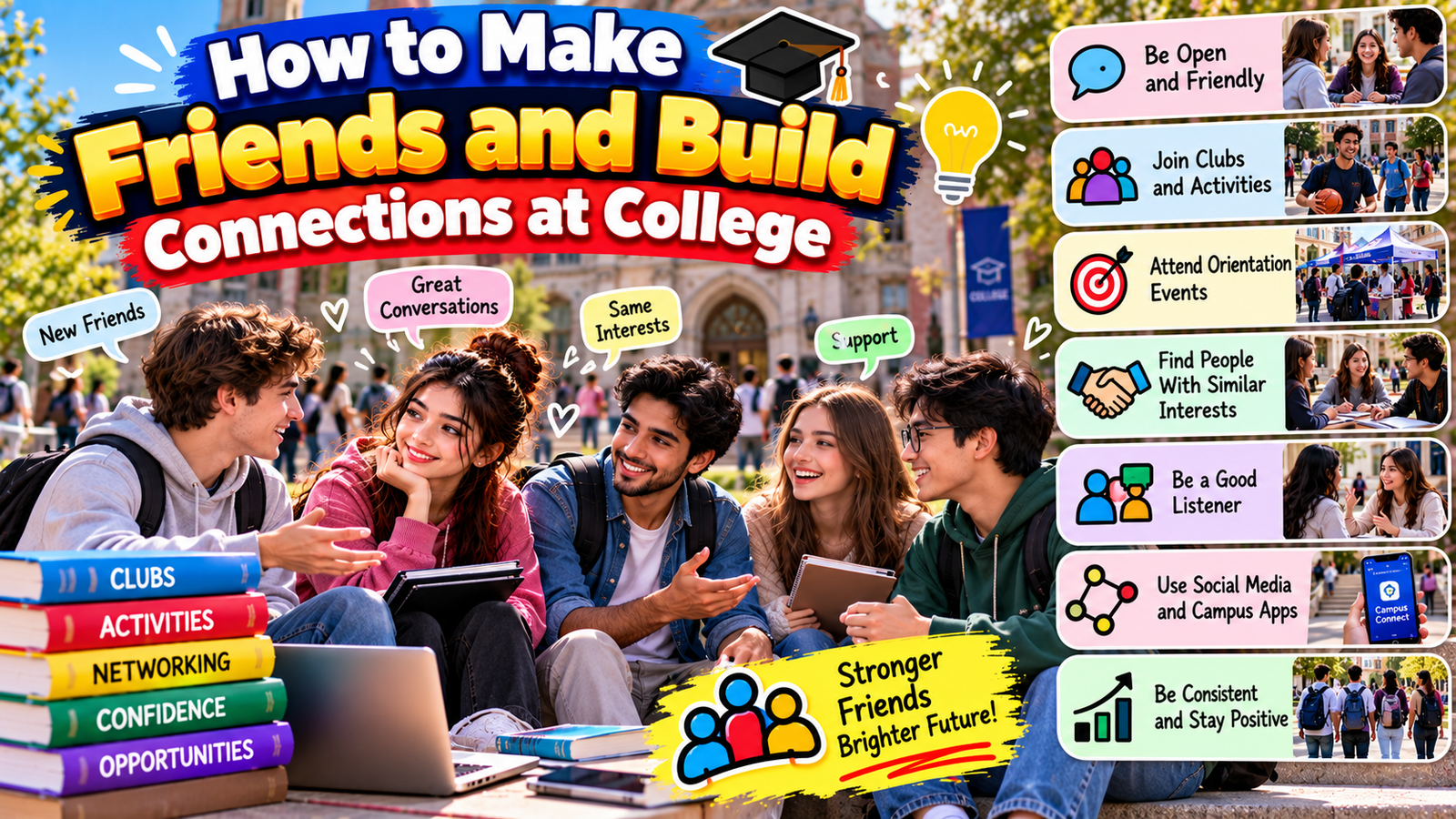
Starting college introduces students to new people, experiences, and opportunities. You may meet classmates from different cities, join student societies, work on group assignments, and discover interests you have never explored before. These experiences can help you build friendships and develop valuable connections.
However, making friends at college does not always happen immediately. Some students feel confident starting conversations, while others find it difficult to approach people they do not know. If you feel nervous about meeting new classmates, remember that you are not alone.
Building friendships is a gradual process. You do not need to become popular or talk to everyone on campus. Instead, focus on being approachable, showing genuine interest in others, and creating opportunities to spend time together.
In this guide, I will share practical ways to make friends and build meaningful connections at college.
1. Start With Small Conversations
One of the easiest ways to meet people is to begin with short, natural conversations.
You do not need a perfect opening line. You can ask a classmate about the timetable, an assignment, a lecture topic, or the location of a campus facility.
For example, you might say, “Have you understood the instructions for our assignment?” or “Do you know which classroom we have next?”
These questions create an opportunity to talk without putting too much pressure on either person.
If the conversation continues naturally, you can ask about their interests, hometown, or experience at college. If they seem busy or uninterested, respect that and try again with someone else another time.
The goal is not to turn every conversation into a friendship. It is to become more comfortable interacting with people.
2. Be Approachable and Friendly
People are often more comfortable talking to someone who appears open to conversation.
A friendly greeting, a genuine smile, and respectful body language can help make interactions easier. When someone speaks to you, listen carefully instead of focusing only on what you want to say next.
You can also show interest by asking follow up questions. If a classmate mentions that they enjoy photography, for example, you might ask what they like to photograph.
You do not need to change your personality to make friends. Quiet students can build strong relationships through thoughtful conversations and shared activities.
Being approachable simply means showing that you are willing to connect when the opportunity arises.
3. Sit Near Other Students
Choosing a seat near other students can make it easier to recognize familiar faces and start conversations.
If you always sit alone in the same distant corner, you may have fewer opportunities to interact with classmates. You can try sitting beside someone who appears comfortable sharing the space.
Before class begins, ask a simple question about the subject or discuss an upcoming task.
Seeing the same classmates regularly can gradually make conversations feel more natural. Over time, you may begin greeting each other, discussing coursework, and making plans to study together.
You should still choose a seat where you can concentrate and participate comfortably. The purpose is to create opportunities for interaction, not to force yourself into uncomfortable situations.
4. Join Student Societies and Clubs
Student societies and clubs are excellent places to meet people who share your interests.
Many colleges offer activities related to sports, technology, literature, photography, debating, volunteering, arts, or entrepreneurship. Participating in these activities allows you to spend time with people outside your regular classes.
Choose a club that genuinely interests you rather than joining only because you think it will make you popular.
Attend an introductory meeting, ask about upcoming activities, and volunteer for small tasks when you feel comfortable.
Shared interests often make conversations easier because you already have something to discuss.
If your college has limited formal clubs, consider organizing a study group, joining a sports activity, or participating in a campus event.
5. Participate in Group Assignments
Group projects can help you develop both academic and social connections.
When working with classmates, contribute your ideas, complete your assigned tasks, and communicate respectfully. Reliable teamwork helps others understand that they can depend on you.
You can suggest dividing tasks according to each person’s strengths and setting clear deadlines. If a group member needs clarification, offer help when possible.
After finishing a project, you might continue the conversation by discussing an upcoming class or suggesting a group study session.
However, remember that classmates do not automatically become close friends. Keep group work professional, respect different working styles, and allow relationships to develop naturally.
6. Attend College Events
College events provide opportunities to meet students from different departments and academic years.
These may include orientation sessions, sports competitions, cultural activities, workshops, seminars, exhibitions, or career events.
Attend events that interest you and make an effort to speak with at least one or two people. You can ask what brought them to the event or which activity they enjoyed most.
If you attend with a friend, avoid spending the entire event talking only to that person. You can introduce yourself to other participants and join group conversations when appropriate.
Events are also useful for discovering student organizations and learning more about campus life.
You do not need to attend every activity. Choose a few opportunities that fit your interests and schedule.
7. Exchange Contact Information Naturally
Once you have had a few friendly conversations with a classmate, exchanging contact information may help you stay connected.
For example, you could suggest creating a study group for an upcoming examination or sharing notes from a lecture.
Ask politely and give the other person a choice. If they prefer not to share their number or social media account, respect their decision.
When connecting online, communicate respectfully and avoid sending repeated messages if someone does not respond.
You can use group chats for class announcements and academic discussions, but remember that not everyone wants to be available all the time.
Healthy connections allow people to maintain their own schedules and personal boundaries.
8. Be Yourself Instead of Trying to Impress Everyone
It can be tempting to change your behavior to gain acceptance, especially when you are surrounded by unfamiliar people.
However, lasting friendships are more likely to develop when people can interact honestly and comfortably.
You do not need to pretend to enjoy a particular hobby, exaggerate your achievements, or agree with every opinion. You can be polite while expressing your own preferences.
It is also normal to have different kinds of friends. Some classmates may become close personal friends, while others may remain study partners or acquaintances.
You do not need to connect deeply with everyone. Focus on relationships where respect, trust, and mutual interest develop naturally.
9. Learn to Listen and Show Support
Good friendships involve more than talking about yourself. Listening carefully and showing consideration can help relationships grow.
If a classmate shares a concern about an assignment or an adjustment to college life, give them space to explain. You can offer practical help when appropriate, but avoid assuming that you must solve every problem.
Remember important details when possible, such as an upcoming presentation or an activity they mentioned. A simple question about how it went can show that you paid attention.
At the same time, maintain reasonable boundaries. You can support a friend without being available at every hour or taking responsibility for all their difficulties.
Healthy friendships are built on mutual respect and effort.
10. Build Professional Connections Too
College is not only a place to make friends. It can also help you develop professional relationships that support your future career.
You may connect with instructors, academic advisers, senior students, alumni, and professionals who attend university events.
Participate in relevant workshops, ask thoughtful questions, and show interest in learning. If an instructor provides guidance, follow up politely when necessary.
You can also use professional networking platforms to connect with people in your field, provided you communicate appropriately and respect their time.
Avoid treating every interaction as a way to obtain a job or personal benefit. Genuine professional connections grow through shared interests, respectful communication, and continued learning.
11. Handle Rejection Without Losing Confidence
Not every attempt to make a connection will lead to friendship. Someone may already have a close group, feel shy, or simply have different interests.
If a conversation does not continue, try not to interpret it as proof that something is wrong with you.
Give people space and continue participating in activities where you can meet others.
Friendships often develop through repeated interactions rather than a single conversation. You may feel more comfortable with certain classmates after working together for several weeks.
If you are experiencing persistent loneliness, consider speaking with a trusted person, student adviser, or campus support service. Seeking support is a sensible step when adjusting to a new environment feels difficult.
12. Balance Social Life With Studies
Building friendships is valuable, but college students also need time for assignments, examinations, rest, and personal responsibilities.
Use a planner or calendar to organize your classes and deadlines. Schedule social activities around your academic commitments instead of leaving important tasks until the last minute.
You can combine social time with learning by forming a study group, visiting the library together, or preparing for presentations with classmates.
A balanced routine helps you maintain relationships without neglecting your education.
Conclusion
Making friends and building connections at college takes time, patience, and small efforts. Start conversations, participate in group activities, join clubs, attend campus events, and show genuine interest in the people you meet.
You do not need to be the most outgoing student to develop meaningful friendships. Listening carefully, respecting boundaries, and being reliable can be just as important as confidence.
Focus on creating honest relationships rather than trying to impress everyone. With regular interaction and an open attitude, college can become a place where you develop friendships, improve your communication skills, and build connections that support your personal and professional growth.